Every climbing plant needs something to hold on to, and the structure you choose shapes how that plant looks, how long it lasts and how much work it asks of you. A flat trellis against a fence is a very different proposition from a timber pergola spanning a seating area. Match the support to the vine and the space, and the plant does the decorating. Get it wrong and you will spend your summers untangling stems from a frame that was never strong enough for them.
Start with the vine, not the structure
Before comparing frames, be honest about two things: how vigorous your climber is, and how much room you can spare. Annual sweet peas will scramble up almost anything and be gone by the first hard frost. Wisteria, by contrast, can throw out several metres of growth in a season and will eventually twist and crush a flimsy frame. A mature climbing hydrangea can prise render away from a wall; a jasmine will happily dress a narrow strip of fence.
Think, too, about where the plant will grow from. A border against a wall points you towards a flat structure. A bed in the middle of a lawn points towards something freestanding. Leave a decent planting pocket — climbers crammed into a gap behind paving rarely thrive, and dry soil at the base of a wall is a common reason for poor flowering.
Trellis: cheap, flat and adaptable
A trellis is a flat panel of timber or metal lattice, fixed to a wall or fence or set into a freestanding frame. It is the least expensive of the three and takes up the least room, often no more than the depth of the battens holding it off the wall. Keep it a few centimetres clear of masonry so air can move behind the foliage; this reduces damp and makes tying in far easier.
Good matches include clematis, jasmine, honeysuckle, sweet peas and annual climbers such as morning glory. Climbing roses will use a trellis as a training frame if you tie the stems in rather than expecting them to cling, and it works well for wall-trained fruit such as espaliered apples and pears.
The trade-off is dimension. A trellis greens up a flat surface only, so it reads as a screen rather than a feature you can walk around. Timber will need re-treating every couple of years, and the fixings are the usual point of failure. Use galvanised or stainless screws and check them after winter gales.
Obelisk: the freestanding middle ground
An obelisk is a tapered frame — timber, metal or woven willow — pushed into a border. Most are roughly knee-width at the base and around two metres tall, which makes them ideal for a small garden, a courtyard or a gap between perennials. Because they are freestanding, they add height in the middle of a bed and can be moved when you replant.
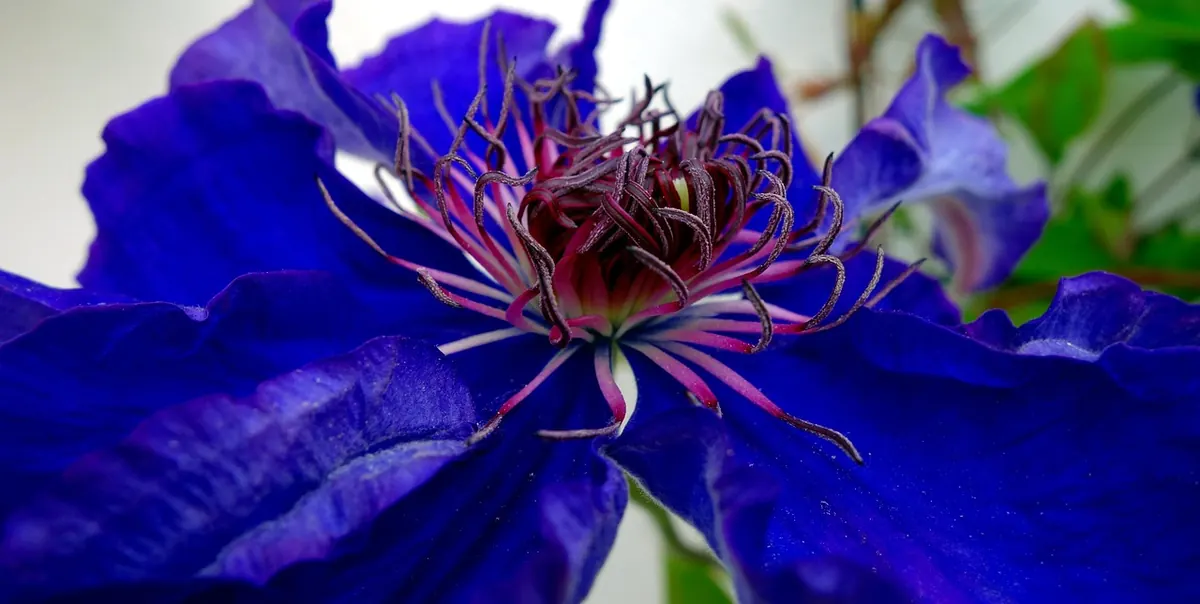
They suit clematis beautifully, particularly the late-flowering types that are cut back hard each spring, plus sweet peas, annual climbers, small climbing roses and vegetables such as runner beans. Two matching obelisks either side of a path or doorway is one of the simplest ways to give a garden structure.
Upkeep is modest. Timber versions need the same re-treating as a trellis; powder-coated metal needs almost nothing. The main job is stability — an obelisk in full leaf catches wind like a sail, so firm it in with a stake or two, or set the legs a good 20cm into the ground. Lift and reposition it every few years to stop rot at the base.
Pergola: the biggest commitment
A pergola has four or more posts and an open roof of rafters. It defines a seating area, casts dappled shade and gives a large climber somewhere genuinely substantial to run. It is also the most expensive option and the most work to install: posts need solid footings, usually concrete, set so the timber sits above wet soil rather than in it.
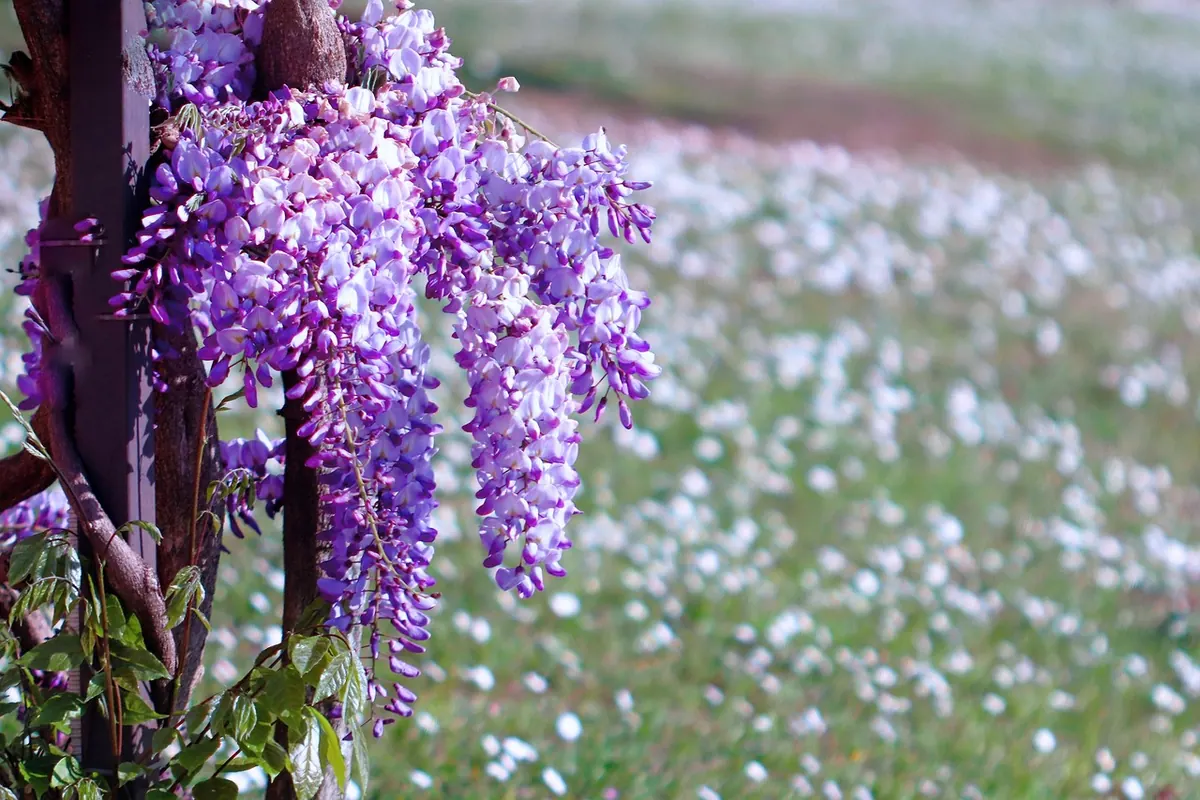
Think in metres, not centimetres. A pergola over a bench wants at least 2.4m by 2.4m; one over a dining table wants 3m by 3m or more, with headroom you can stand up in. For climbing plants, the best candidates are wisteria, grape vines, large-flowered clematis, campsis, akebia and roses trained up the posts and along the rafters. Allow years, not months, for the roof to fill in — wisteria in particular is slow to start and long-lived once it does.
Keep rampant climbers away from house walls, where they can work their way into gutters and under tiles. A freestanding pergola at the end of the garden is a far better host. Maintenance is a long-term relationship: re-oil or stain timber every year or two, check joints and bolts, and prune hard enough each year to keep the structure visible and stop weight accumulating.
Cost, footprint and upkeep at a glance
- Trellis — lowest outlay, smallest footprint (a few centimetres of depth), quickest to fit, needs regular timber treatment and firm fixings.
- Obelisk — mid-range, footprint about the width of its base, movable, needs anchoring in exposed sites.
- Pergola — highest outlay, footprint large enough to sit under, permanent, needs footings and steady maintenance.
Which one suits your garden?
- Small courtyard, rented house, or you might move: trellis or a pair of obelisks.
- A screen along a boundary, or a bin store to hide: trellis, ideally with a sturdy frame behind it.
- Height and colour in the middle of a border: obelisk.
- Shade, a place to sit, and room for a big climber: pergola.
- Exposed, windy site: metal rather than light timber, and anchor everything properly.
Before you buy
Measure the space twice and check the plant's eventual spread, not its size in the pot. A climber sold at 60cm may reach six metres. Set the structure far enough from the wall to allow pruning and painting behind it, and plant about 45cm out from masonry, training the stems back towards the support — the soil there is drier and roots establish better.
Shade the base of clematis with a low perennial or a flat stone; they like cool roots and sun on their leaves. Finally, if the structure is large, close to a boundary, or your home is listed or in a conservation area, check with your local authority before you dig. Then plant something you actually like looking at. A support is only ever half the picture.
Photo: Marisa04 / Pixabay