A bare fence panel does its job, but it rarely earns a second glance. The right climber can turn a run of flat boards into a living backdrop, screen a tired shed and give you privacy a waist-high boundary never will. The trick is matching the plant to the structure it has to cover — and giving it support that will not pull the whole thing apart.
Assess the structure before you buy a plant
Start with the fence, wall or shed itself. A south-facing panel bakes in summer and dries out fast; a north-facing one stays damp and casts the soil at its base into shade. Both are workable, but they call for different plants.
Look at what you are covering, too. Featheredge boards, brick, render, corrugated metal and plastic sheds all behave differently. Vigorous climbers such as wisteria or ivy add real weight and hold moisture against a surface, so a flimsy panel may sag or rot sooner. Repair a leaning fence or a failing shed roof first — covering it up only delays the problem.
Think about access. If you need to paint a shed or replace a panel, a climber that must be cut back every time quickly becomes a chore. And where you cannot drill — a rented garden, a plastic shed, a paved patio — freestanding supports will do the job just as well.
Match the climber to the way it climbs
Climbers hold on in four main ways, and this is the single most useful thing to know before choosing.
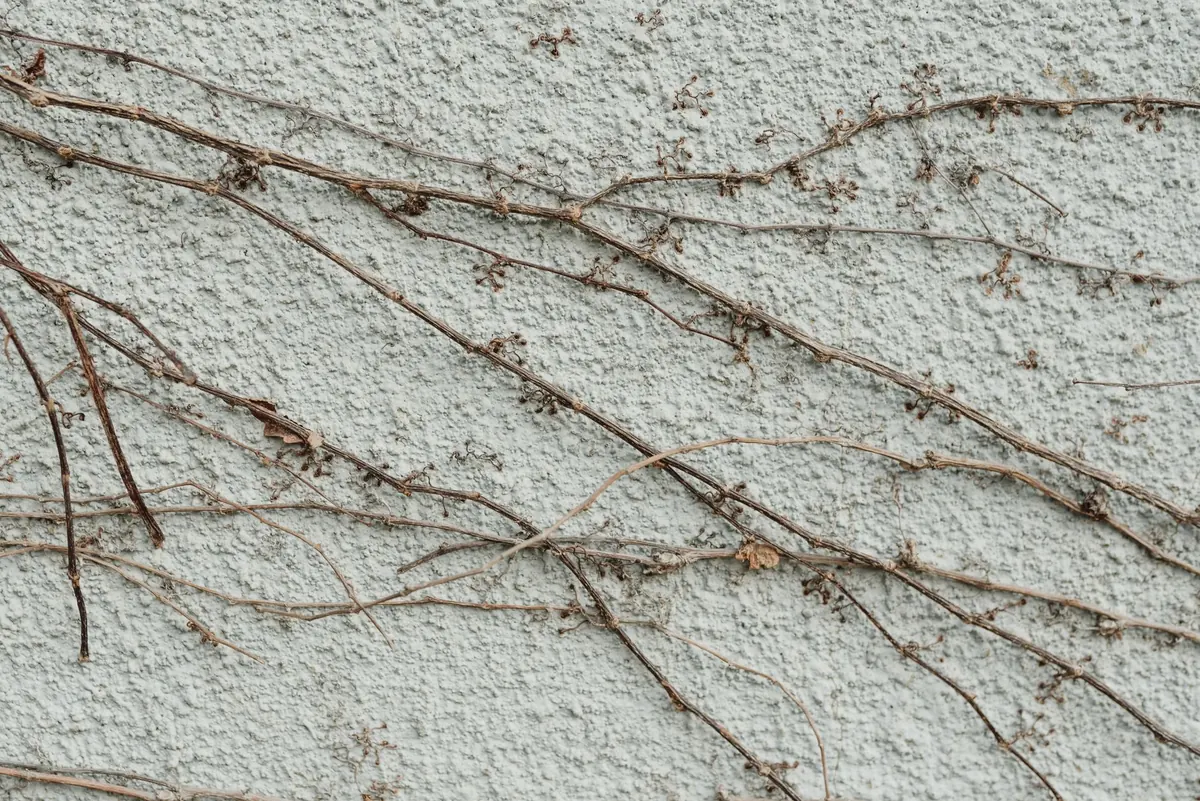
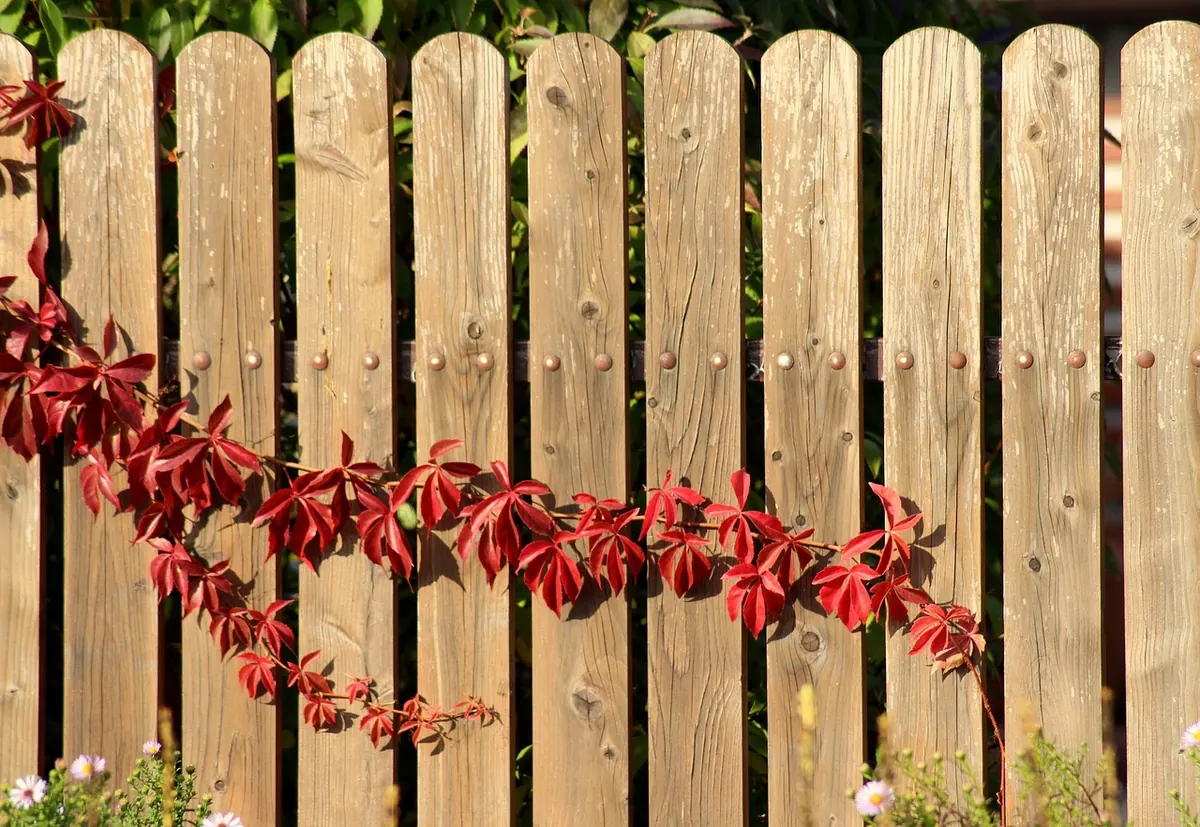
- Self-clinging: ivy, Virginia creeper and climbing hydrangea attach themselves with aerial roots or suckers. They need no support and will cover a large area, but they are difficult to remove and best kept off timber you may want to paint.
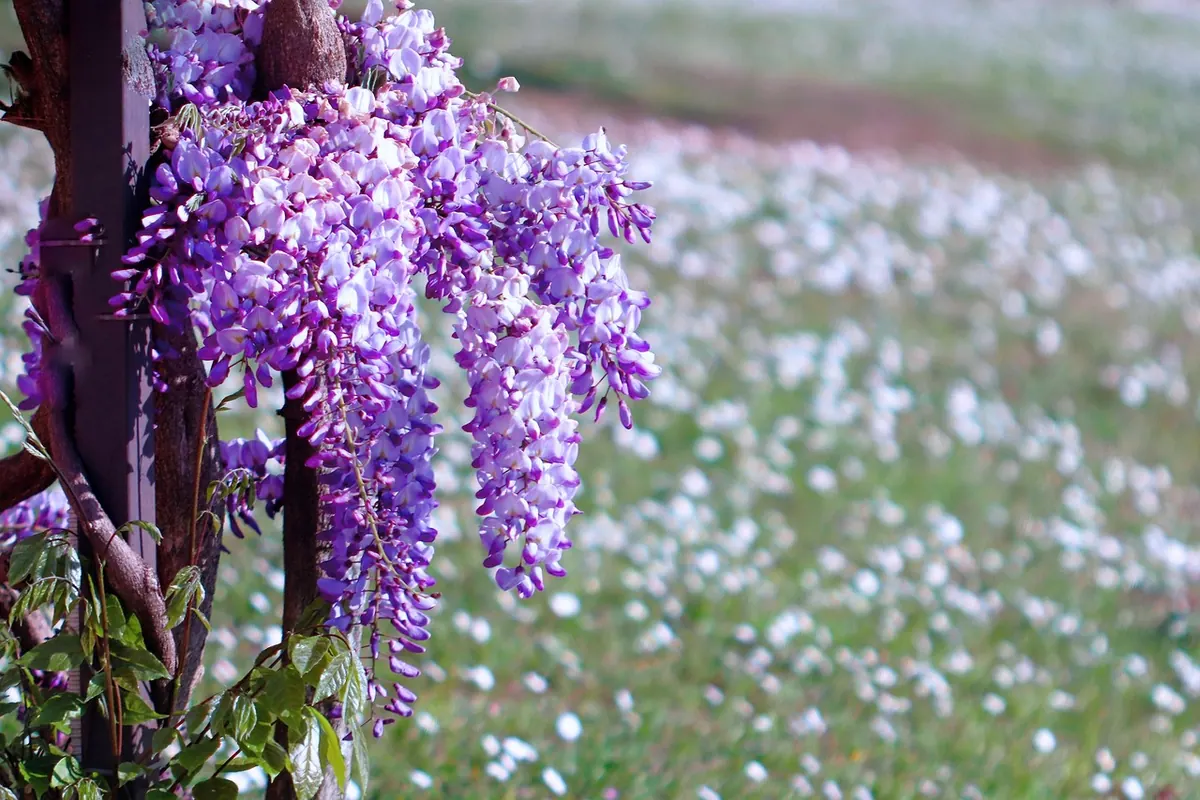
- Twining: wisteria, jasmine, honeysuckle and akebia wrap their stems around a support. Give them strong horizontal wires or a sturdy trellis; thin netting will not hold them.
- Tendril and leaf-stem climbers: clematis, sweet pea and passionflower grip fine wire, mesh or netting. They suit light structures and narrow gaps.
- Scramblers: climbing roses and similar plants lean rather than cling. They need tying in at regular intervals, and a frame strong enough to carry them.
Add the practical details: how much sun the spot gets, how exposed it is to wind, and whether you want evergreen cover or flowers. An evergreen backbone with flowering climbers threaded through it looks far better in winter than either would alone.
Support systems that do the job quietly
Tensioned galvanised wire is the neatest option for most fences and walls. Screw vine eyes into posts or masonry at roughly 45–60cm intervals and run wire between them, using a turnbuckle to keep it taut. Two or three rows will carry jasmine, honeysuckle or a compact clematis without cluttering the view.
Where you want a denser screen, fix trellis or a metal grid to battens so it sits a few centimetres off the fence. That gap matters: it lets air move behind the plants and makes it much easier to reach the fence for repairs. For sheds, obelisks and freestanding frames in planters are the simplest answer — height and coverage without touching the structure.
Planting so the cover fills in evenly
Dig the planting hole 30–45cm out from the fence or wall, not right against it. Rain rarely reaches that strip, so fork in plenty of garden compost and a handful of general-purpose fertiliser. Set the plant at the same depth it was in its pot, angle the stems towards the support, and water it in well.
The first year is about direction, not size. Tie in the strongest shoots and bend them sideways rather than letting them run straight up; horizontal growth triggers side shoots and fills the base of the fence instead of leaving a bare gap at eye level. Water regularly for the first two summers, mulch in spring, and pinch out the tips of fast growers to encourage bushier growth.
Softening sheds, garages and awkward structures
A shed is usually the plainest thing in the garden and the easiest to improve. Keep climbers away from felt roofs and gutters — ivy in particular will work its way underneath and cause leaks — and never let growth cover air vents or block a door. On timber sheds, self-clinging plants trap damp against the boards, so choose something that climbs on wires instead and can be lifted away when the wood needs treating.
If the shed is small or you cannot plant at its base, use pots. Sweet peas, nasturtiums and morning glory will cover a frame in a single season, then go on the compost heap. For something permanent, a large planter with a metal obelisk and a compact clematis gives height without weight.
Using climbers for privacy
Climbers will not create privacy where there is no structure to climb, but they will thicken and raise an existing boundary. Evergreens such as ivy, evergreen honeysuckle and star jasmine hold their cover through winter, especially in a sheltered spot; deciduous climbers over the top add flowers in summer. Train growth upwards and sideways to build a solid screen rather than a thin curtain.
Before you add height, check what your deeds or local planning rules allow for boundary structures, and speak to neighbours if a frame or planting will sit close to the line. Keep the plant trimmed on your side rather than letting it sprawl into someone else's garden, and be careful with anything prickly or vigorous near a shared path.
Keeping growth under control
Pruning is what separates a well-behaved climber from a problem. Wisteria needs its long summer growth cut back and a second tidy in winter. Clematis are grouped by flowering time, and pruning at the wrong moment costs you a year of flowers. Roses are pruned in late winter and tied in as they grow. Ivy is simply cut back hard wherever it wanders.
Whatever you plant, keep it clear of windows, doors, gutters and airbricks, and check each year that stems are not lifting mortar or forcing boards apart.
A simple plan to start with
- Note the aspect, soil and condition of the fence, shed or wall you want to soften.
- Decide whether you need evergreen cover, flowers, or both.
- Fit the support first — wires, trellis on battens, or a freestanding frame.
- Plant 30–45cm out, improve the soil, and water well for two summers.
- Train shoots horizontally in the first year to fill in low down.
- Prune to the plant's own schedule and keep growth off roofs and gutters.
Get those steps right and a plain boundary stops being a backdrop. It becomes part of the planting, giving you colour, scent and cover without a single panel being replaced.
Photo: _Alicja_ / Pixabay