Vines rarely fail in one dramatic moment. They drift: a shoot left untied, a hot fortnight missed with the watering can, a dry strip of soil under the eaves that never gets rain. Then one spring you notice the flowers have moved two metres up the wall and the base is bare. The answer is not to work harder but to work at the right time — every job below lands when the plant can respond best.
Spring (March to May): decisions and tying in
March sorts out the year. Finish the hard pruning you began in winter: late-flowering clematis down to a fat pair of buds roughly 30cm from the ground, grape vines cut back to their permanent framework before the sap starts moving, ivy trimmed away from window frames and gutters. Once the worst frosts have passed — usually mid to late April in the south, later in the north — you can plant new vines. A spring planting gives roots a full season to settle before their first winter.
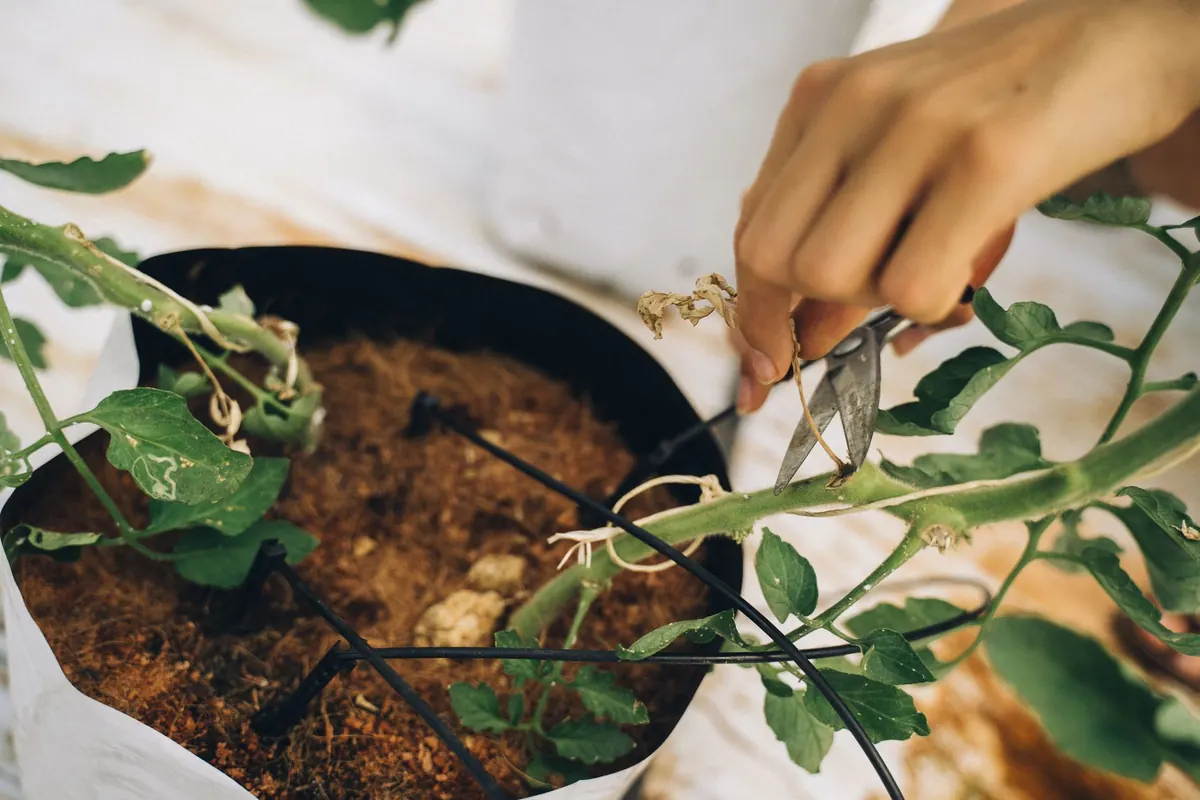
From April, start tying in. New growth is soft and snaps easily, so loop it in gently with soft twine or adjustable vine ties rather than forcing it flat. Aim for a fan of evenly spaced shoots across your wires or frame, because gaps now become bare patches later. Feed established vines as the buds break: a balanced general fertiliser while growth is leafy, then switch to a high-potash tomato feed once flower buds appear. Water first, then mulch with 5–7cm of well-rotted compost or bark, keeping it clear of the stems so the bark does not soften.
Summer (June to August): water, feed, train
Watering is the job most people get wrong. A daily sprinkle does less good than a slow soak once or twice a week, because it never reaches the roots. Vines against a house wall are worst affected: rain shadows and wide eaves mean the soil at the base can stay bone dry while the top growth looks perfectly happy. For the first two summers after planting, and throughout flowering or fruiting, check the soil 10cm down before deciding whether to water.
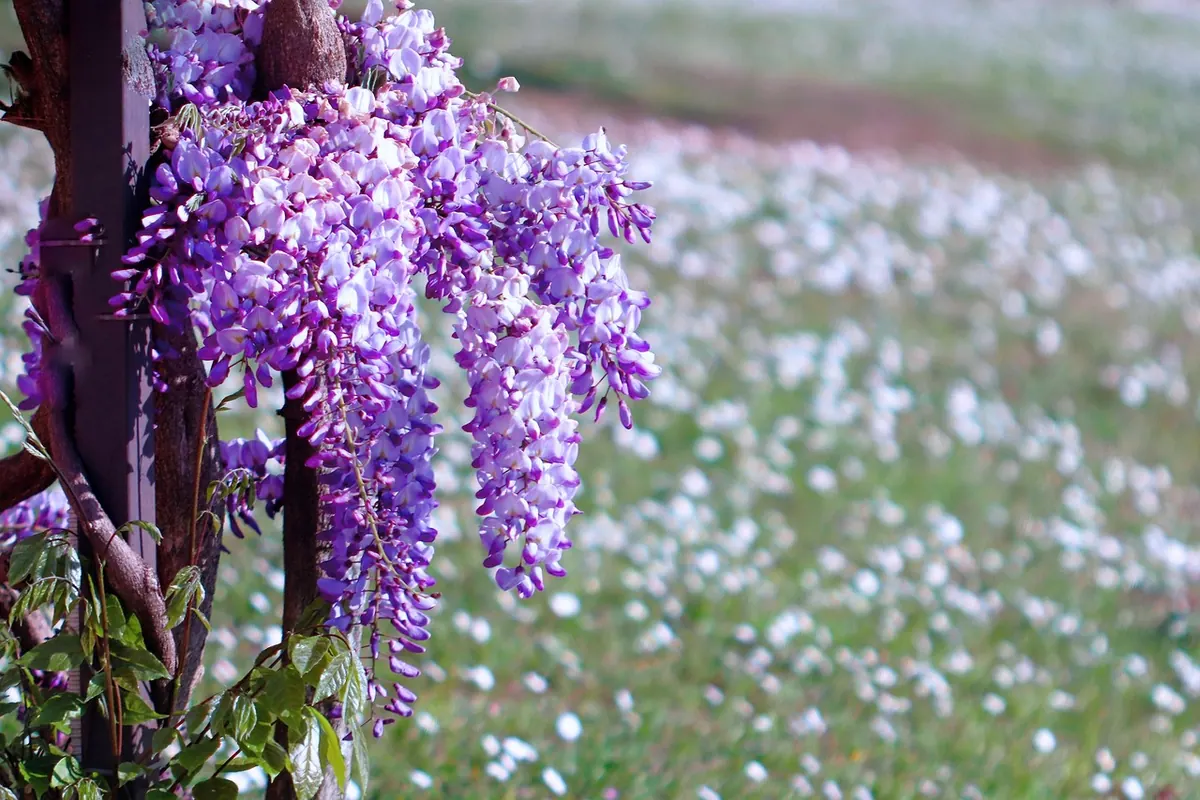
Feeding follows flowering. Wisteria, honeysuckle, jasmine and most clematis respond well to a potash-rich feed every fortnight through the growing season; too much nitrogen gives you a wall of leaf and no flowers at all. Container-grown vines need feeding more often, since nutrients wash out with every watering.
Keep training as you go. In August, cut wisteria's long whippy shoots back to about five or six buds — this is the pruning that builds flowering spurs for next year. Thin congested clematis stems to let air move through the plant, and check ties are loose enough to allow stems to thicken.
Autumn (September to November): planting and tidying
Autumn is the best planting window across most of the UK. The soil is still warm, rain is more dependable, and roots keep growing until the ground cools. Bare-root and containerised vines planted now will establish better than anything planted in spring. Add a handful of blood, fish and bone to the planting hole and water in thoroughly, even if rain is forecast.
Tidy as you work. Clear fallen leaves from the base of wall-trained vines, where slugs and fungal problems like to sit. Cut back any shoots that have crept behind cladding, into gutters or under roof tiles; once they are inside, they are very hard to remove. Leave late-flowering clematis alone for now — its seedheads are worth keeping through the frost.
Winter (December to February): structure and pruning
With the vine dormant you can finally see its shape, which is when the real pruning happens. Wisteria: shorten the summer-pruned spurs to two or three buds in January or February. Climbing roses: thin out the oldest stems and tie in the new ones. Grape vines: prune in midwinter, never in late spring, when bleeding sap can weaken the plant. Winter jasmine, which flowers on last year's wood, waits until after flowering in early spring.
Know your clematis group
- Group 1 (montana, alpina, macropetala): prune after flowering in late spring. No regular hard pruning needed.
- Group 2 (large-flowered early types and doubles): a light tidy in late winter, cutting back to a strong pair of buds, then a second light trim after the first flush of flowers.
- Group 3 (jackmanii, viticella, tangutica, texensis): hard prune in late winter to about 30cm, or roughly two pairs of buds from the base.
If you do not know the group, watch when it flowers. Flowers before midsummer: prune after flowering. Flowers from midsummer onwards: prune hard in late winter.
A month-by-month checklist
- January: prune wisteria spurs, grape vines and climbing roses; check ties, wires and vine eyes.
- February: hard-prune group 3 clematis; finish structural pruning before buds swell.
- March: mulch, feed, plant; begin tying in new growth.
- April: plant out and keep an eye on late frosts; water new plantings weekly.
- May: tie in, thin crowded shoots, start high-potash feeding.
- June: deep watering, fortnightly feed, watch aphids on soft tips.
- July: keep training, deadhead, water containers daily in hot spells.
- August: summer-prune wisteria, trim ivy, take cuttings if you want more plants.
- September: plant, top-dress with compost, clear debris from the base.
- October: plant bare roots, cut back anything heading for gutters.
- November: last planting window; check ties before gales and move pots out of standing water.
- December: sharpen tools, plan winter pruning, avoid heavy cutting in hard frost.
Keep a simple vine diary
One notebook page per vine is enough. Note the date it flowered, when you pruned it, whether the flowers came on old or new wood, and how dry the soil felt in August. After two seasons you will have a calendar built around your own garden, its aspect and its soil — far more useful than any general guide, including this one. Sharp secateurs, a roll of soft twine and a decent pair of gloves will see you through most of it.
Photo: Anna Tarazevich / Pexels