North-facing walls have a reputation problem. They are cooler than the rest of the garden, slower to dry out, and for much of the year they see little direct sun. Yet that same cool shade is exactly what a surprising number of climbers want, and a north wall can end up being the most productive surface you own. Get the choice right and you will have scented honeysuckle, spring clematis, glossy evergreen ivy and fiery autumn colour without ever fighting the conditions. Get it wrong — a wisteria, say, or a tender star jasmine — and you will spend years coaxing a plant that would rather be somewhere else. This is how to work out what will genuinely thrive on your wall.
Read the wall before you buy anything
Spend a day noticing what the wall actually gets. There is a big difference between a north wall that receives bright, indirect light from morning to evening and one that sits in genuine gloom behind a fence or an evergreen hedge. The first will support far more plants than the second. Four things are worth checking before you spend a penny:
- Surface. Brick, stone, render or painted? Crumbly mortar and old render are not the place for plants that grip with aerial roots. Use wires instead.
- Soil at the base. Is it decent border soil, or compacted rubble under paving? North walls often sit in a rain shadow under the eaves, so the ground can be bone dry even after a wet week.
- Drainage and pH. Heavy clay, chalk or light sand? Lime leaching from mortar makes the soil right against the wall more alkaline than the rest of the border.
- Room to grow. How tall is the wall, and how wide can the plant spread before it reaches a window, door or gutter?
Self-clinging climbers that shrug off shade
Plants that cling with aerial roots or suckers need no support at all and will cover a wall on their own. Most of the dependable ones are woodland plants by nature, which is precisely why they cope with shade.
- Ivy (Hedera helix and H. hibernica): evergreen, dense and utterly reliable in shade. Autumn flowers feed late bees and the winter berries feed birds. Keep it away from window frames and off crumbling mortar.
- Climbing hydrangea (Hydrangea anomala subsp. petiolaris): slow for two or three years, then generous. White lace-cap heads in midsummer and buttery yellow autumn foliage.
- Schizophragma hydrangeoides: similar habit, larger and flatter flower heads, and it handles deep shade well.
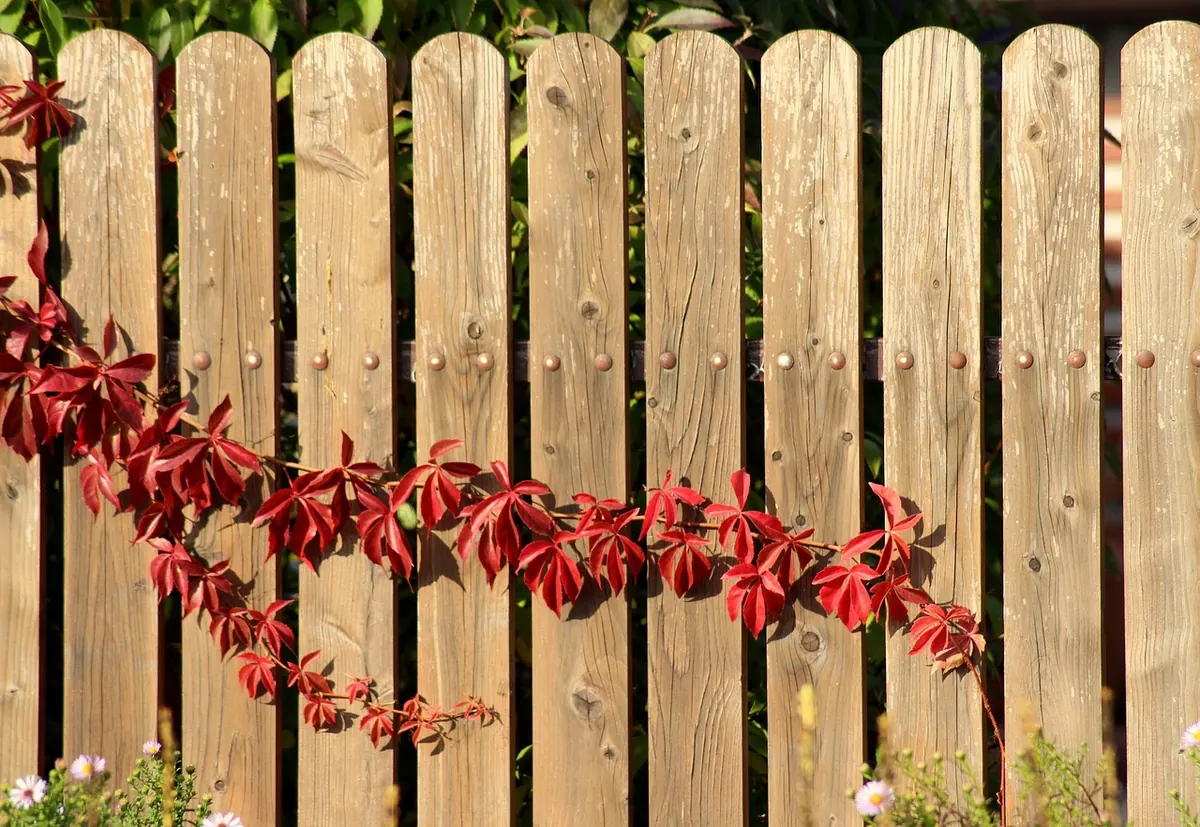
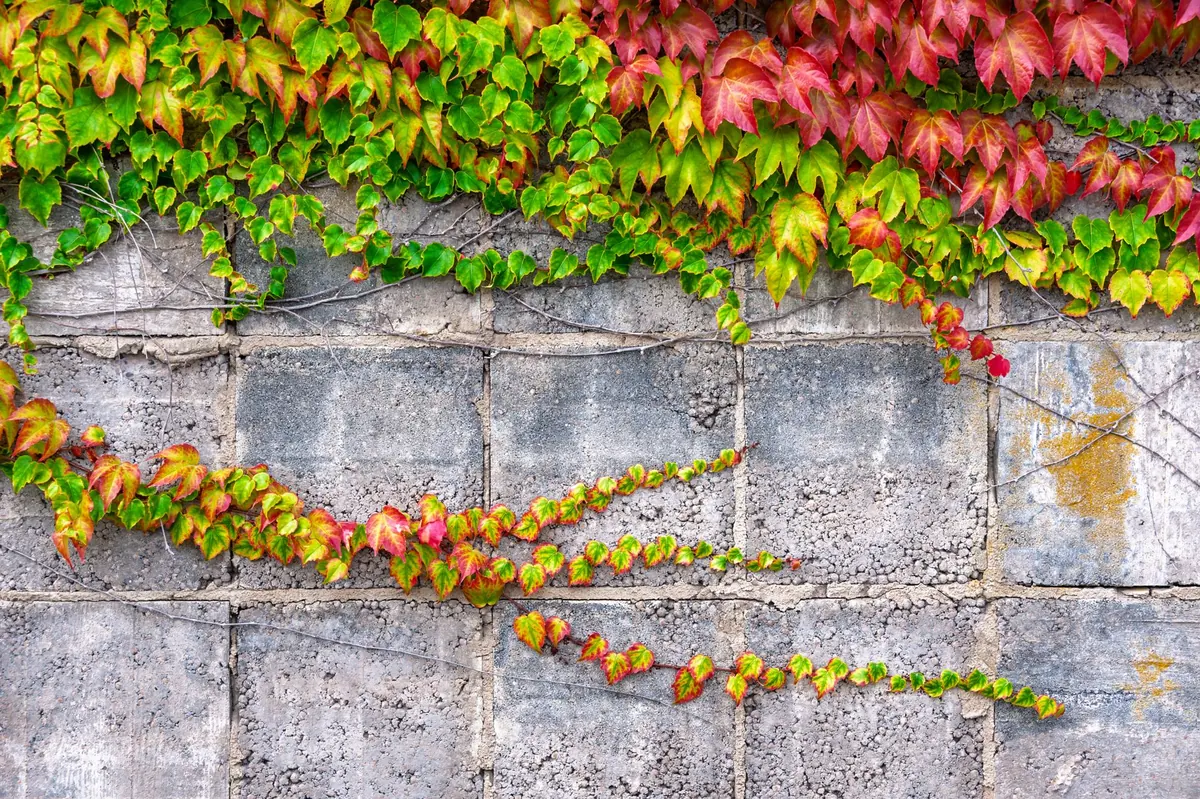
- Virginia creeper and Boston ivy (Parthenocissus quinquefolia and P. tricuspidata): the fastest cover of the lot. Autumn colour is richest with a little sun, but growth in shade is perfectly respectable.
- Pileostegia viburnoides: evergreen, with creamy panicles in late summer. It wants shelter and mild winters, so it suits the south and west more than the north-east.
Twining and scrambling climbers for a north wall
These need wires, a trellis or a sturdy shrub to climb through, but they bring flowers and scent that self-clingers cannot offer.
Spring clematis are the standouts. Clematis alpina and C. macropetala flower in April and May, cope with shade, and need no pruning beyond a tidy-up after flowering. Give them well-drained soil and their feet in the shade of a low shrub — a north wall suits them far better than a hot south-facing one, partly because the cooler wall delays growth and dodges late frost damage.
Honeysuckle (Lonicera periclymenum) is the classic choice for evening scent, and it will grow in shade, though it flowers more freely with a couple of hours of sun. L. japonica is more shade-tolerant but rampant — only plant it if you are prepared to cut it hard every year.
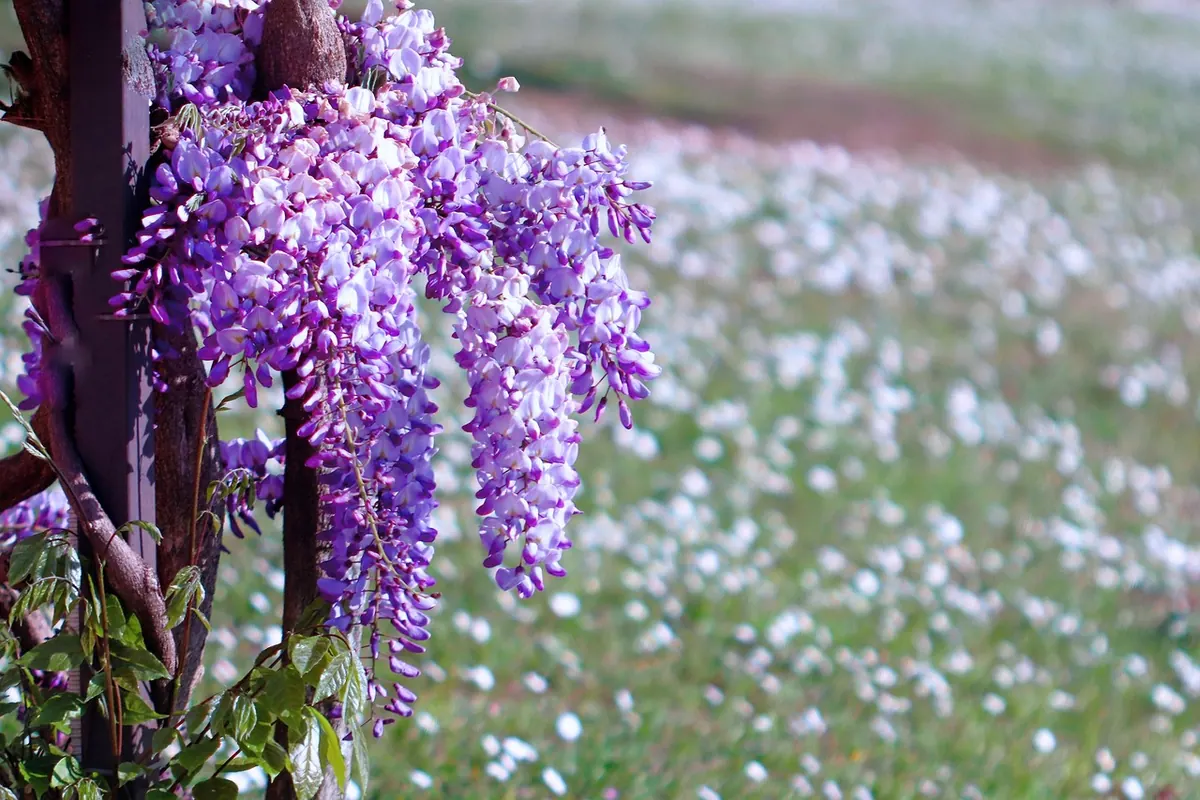
Other options worth knowing: Akebia quinata for chocolate-scented spring flowers; Garrya elliptica for evergreen leaves and grey winter catkins; Celastrus orbiculatus for bright autumn berries, though you need both a male and a female plant; and Actinidia kolomikta, whose leaves flush pink and cream, with the strongest colour in brighter spots. Avoid wisteria, most climbing roses and Trachelospermum jasminoides here. They want sun and warmth, and a north wall will leave them leggy and flowerless.
Match the plant to your soil and the space
Two climbers can look identical in a catalogue and behave completely differently in your garden. Vigour is the first thing to judge: Virginia creeper will happily swallow a two-storey gable, while a climbing hydrangea takes years to reach the eaves. Be honest about how much pruning you will actually do.
Moisture matters more than aspect on a north wall. If the border sits under an overhang, plan to water through the first two summers and choose plants that tolerate dry shade — ivy, Parthenocissus and Garrya all manage. If the ground is heavy and wet, clematis will sulk and rot, so improve drainage with grit and compost before planting. On chalk or limestone, the lime-tolerant ivies, honeysuckles and Clematis alpina are the safe bets; for acid-loving Berberidopsis corallina, a container of ericaceous compost is more realistic than trying to change the soil.
Planting and training: getting them off to a good start
- Fit your support first — tensioned galvanised wires on vine eyes, spaced about 40cm apart — so you are not fumbling around a growing plant later.
- Plant in autumn or early spring, while the soil is workable and still warm.
- Dig the hole around 45cm out from the wall, not tight against it. Roots need to catch rainwater, and the wall itself can be bone dry.
- Make the hole twice the width of the rootball and fork in garden compost or well-rotted manure. If the ground is rubble, dig it out and replace it with decent topsoil.
- Angle the stem back towards the wall and tie in a bamboo cane to guide the first shoots.
- Water thoroughly and mulch, keeping the mulch clear of the stem.
- Tie new growth to the wires every few weeks through the first season. After that, most plants will hold on by themselves.
Looking after a north-wall climber
Pruning depends
Photo: Sergej ***** / Pexels