A garden path gets judged twice: once by the eye, and once by the wheelbarrow. A surface that looks beautiful in June can turn into a rutted, slippery nuisance by January, and the material you choose decides which of those you end up living with. The good news is that all three of the usual suspects — loose gravel, paving and bark — work well when they're matched to the right spot and laid properly. The bad news is that they are not interchangeable, and the mistakes are expensive to undo.
Before you choose, answer three questions honestly. How much traffic will the path take? How much upkeep are you genuinely willing to do? And how does the rest of the garden look and feel? A cottage border, a formal lawn and a shady woodland corner all pull towards different answers.
Gravel and Chippings: Cheap, Quick, Forgiving
Loose aggregate is usually the least costly option per square metre, and it's the fastest to lay. It drains beautifully, it flexes with the ground rather than cracking, and it hides a multitude of sins in an awkward, uneven corner. For an informal path through a border or around a shed, it takes some beating.
The stone you pick matters more than most people expect. Angular chippings in the 14–20mm range interlock and stay put reasonably well, even on a gentle slope. Rounded pea gravel, on the other hand, rolls underfoot and migrates into lawns and beds with alarming enthusiasm. If your path slopes, or leads to a door, choose angular.
Loose gravel needs containment. Without a firm edging — timber, brick set on edge, steel strip or a low kerb — it will spread. Lay a woven landscape fabric beneath it to slow weeds, then top with roughly 50mm of stone for foot traffic, a little more where you'll be pushing a barrow. Deeper gravel is hard work to walk through, so resist the urge to pile it on.
Expect to top it up every few years, to rake it back off the lawn now and then, and to accept that cats may treat a freshly raked path as a convenience. It's also noisy underfoot and awkward to sweep, so keep it away from the route you take in your best shoes.
Paving, Setts and Slabs: Pay Once, Live With It
Paving gives you a firm, level, cleanable surface that carries wheelbarrows, prams, bikes, trolleys and wheelchairs without complaint. It costs the most up front and, done properly, needs the least attention afterwards. A well-laid stone or concrete path can easily outlast the person who laid it.
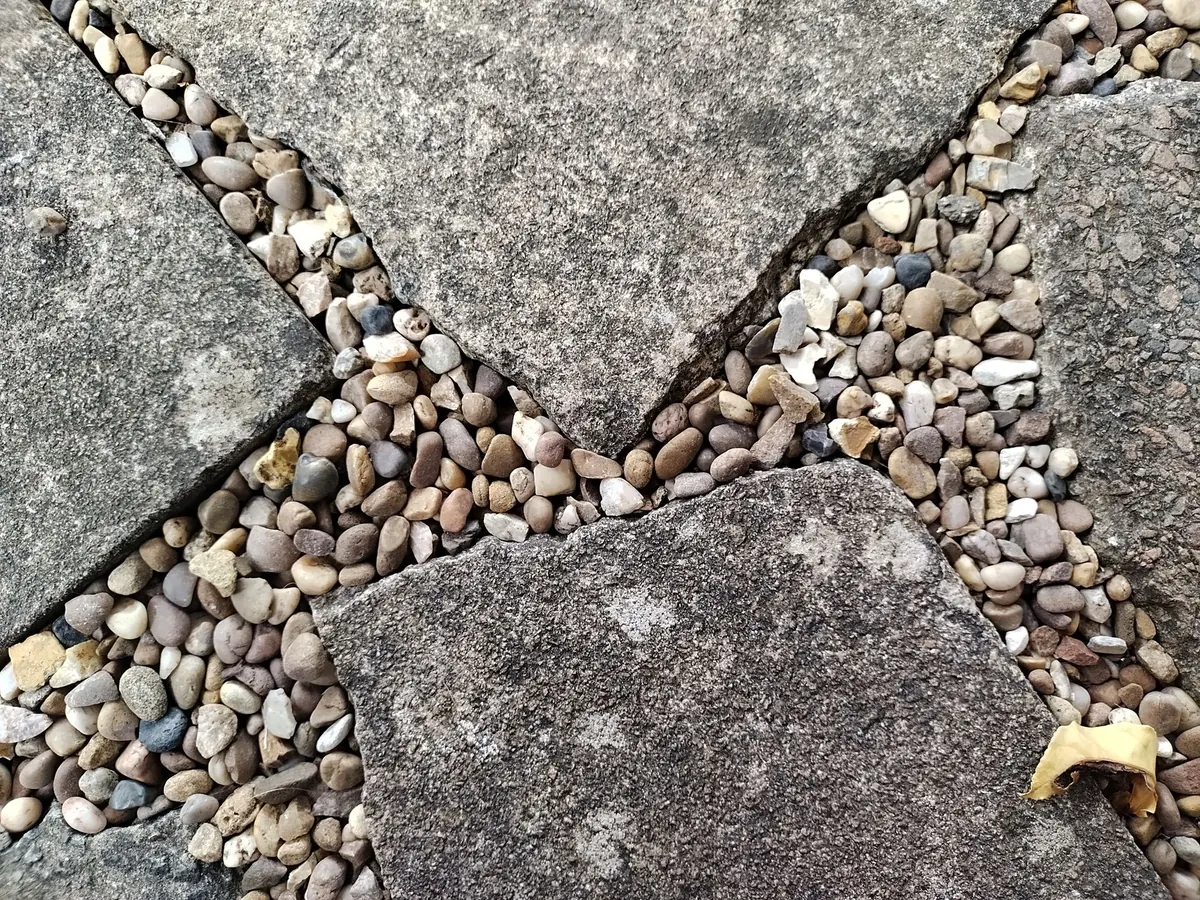
The catch is the groundwork. Paving is only as good as what sits under it: typically a dug-out, compacted sub-base, a bedding layer and a suitable joint, whether that's mortar, a resin-based jointing compound or fine grit for a flexible build. Skip that preparation and you'll be rewarded with rocking slabs, ponding water and weeds pushing up through the joints within a season.
Give the path a gentle fall away from the house — somewhere around 1 in 60 to 1 in 80 is the usual rule of thumb — and plan where the water will go once it leaves the paving. On the surface itself, choose textured slabs, riven stone or clay pavers. Smooth, polished finishes look wonderful in a showroom and treacherous under a February drizzle.
Bark and Woodchip: Soft Underfoot, Short-Lived
Bark chip is the material for woodland corners, sensory planting, play areas and anywhere you want the path to blend into the planting rather than cut through it. It's inexpensive, quick to spread, quiet to walk on, and kind to the soil beneath it as it breaks down.
That breakdown is the trade-off. Bark decomposes, so it needs topping up every year or two, and it can turn spongy and slippery in a wet winter. Keep it away from timber structures, air bricks and vents, where its dampness is unhelpful, and avoid it on slopes, steps, and any route you rely on in the darker months. It also breaks down faster in shade than in sun.
Drainage, Weather and Wear
How a surface copes with a British winter is the difference between a path you enjoy and one you resent. Gravel passes water straight through to the ground below. Paving relies on its fall, its joints and, where the ground is heavy clay or the path sits low, a channel drain or soakaway to move water away. Bark soaks up a surprising amount of rain, but once saturated it stays soft, and it holds that moisture for days.
Use this quick checklist before you commit:
- Clay soil? Plan drainage first, whatever the surface.
- A slope? Paving or a bound surface; loose gravel will wash and bark will slide.
- Daily use to a door or gate? Something firm and sweepable.
- Heavy barrow traffic? Paving, or gravel over a solid base.
- Tree roots and shade? Bark or a narrow gravel path that keeps digging to a minimum.
- Low budget, low fuss? Gravel, contained by decent edging.
Matching the Material to the Place
A front path sets the tone before anyone reaches the door, so paving or a resin-bound surface tends to earn its money there — firm, tidy and easy to sweep. A side alley used for bins and bikes wants the same treatment, or gravel over a firm base. Kitchen gardens and vegetable plots suit paving or gravel; bark goes mushy underfoot exactly when you're harvesting in wet weather. For a slow wander through a wilder area, bark is hard to beat, and gravel works equally well if you want something that won't need topping up.
The best gardens usually mix them: paving at the threshold, gravel through the working areas, bark under the trees. Just keep the transitions deliberate, with a proper edging or a change of level, rather than letting one material bleed into the next.
Getting the Groundwork Right
Every material on this list fails for the same reason — a hurried base. Strip the topsoil, compact a proper sub-base, edge both sides of the path, and make sure water has somewhere to go before you lay a single stone or bag of chippings. Where a path meets a step, a door or a gate, keep the surface firm and well drained; those are the spots that turn icy first.
If you're paving a front garden in England, there are rules about impermeable surfaces above a certain size, and permeable alternatives can sidestep them entirely. It's worth a call to your local planning authority before you order materials. And if the ground is sloping badly, drainage is already a problem, or the path has to meet a public footpath, it's sensible to get a professional to look at it before you start digging.
Photo: Mike Maude / Pexels